Table of Contents
You’re tired of your TV’s tinny speakers ruining movie nights, but navigating the world of premium audio feels overwhelming. Between the technical jargon and conflicting reviews, it’s hard to know what’s actually worth your money. The Klipsch FLEXUS 300 Soundbar promises to solve this with Dolby Atmos immersion and automatic room correction—but does it deliver in real living rooms, not just in spec sheets?
As someone who’s tested dozens of soundbars in homes ranging from compact apartments to open-plan living spaces, I’ve learned that specs only tell half the story. The real test comes when you’re trying to hear dialogue in a tense thriller or feeling the rumble of an explosion without annoying your neighbors. The Klipsch FLEXUS 300 Soundbar with Dolby Atmos and Dirac Live technology represents a significant step toward premium home audio, but it’s not the perfect solution for everyone.
Key Takeaways
- Automatic room correction works impressively well, adapting to room acoustics better than most competitors in this price range
- Dolby Atmos height effects are subtle but present—managing expectations is crucial for this compact bar
- Setup is genuinely plug-and-play, making it accessible for non-tech-savvy users
- The sound signature leans bright and detailed, which excels with dialogue but can be fatiguring at high volumes
- Value proposition depends heavily on your room size and primary content—it shines in medium-sized spaces with cinematic content
Quick Verdict
Best for: Movie enthusiasts in medium-sized rooms who want cinematic audio without complex calibration, and anyone prioritizing crystal-clear dialogue reproduction.
Not ideal for: Large, open-plan living spaces requiring room-filling sound; bass enthusiasts who want earth-shaking low-end; budget-conscious buyers who can sacrifice some features for significant savings.
Core strengths: The automatic Dirac Live room correction genuinely works, creating optimized sound regardless of room placement. Dialogue clarity is exceptional, making it perfect for TV shows and movies with complex audio mixing. The plug-and-play setup means you’re enjoying upgraded audio within minutes of unboxing.
Core weaknesses: Bass response, while clean, lacks the punch needed for action movie enthusiasts. The bright sound signature, while great for dialogue, can become fatiguring during long listening sessions. At nearly $1,000, it sits in a competitive space where alternatives offer different trade-offs.
Product Overview & Specifications
The Klipsch FLEXUS 300 Soundbar represents Klipsch’s entry into the competitive mid-to-high-end soundbar market, leveraging their audio heritage while incorporating modern technologies like Dolby Atmos and Dirac Live room correction. What sets this apart from typical soundbars is the automatic optimization—rather than requiring manual calibration with a microphone, it uses built-in sensors and algorithms to adapt to your room’s acoustics.
In practical terms, this means the soundbar analyzes your room’s reflections, dimensions, and even furniture placement to deliver optimized audio without you needing to understand acoustic principles. The 5.1.2 channel configuration includes upward-firing drivers for Dolby Atmos height effects, though as we’ll discuss in the performance section, these are more subtle than what you’d experience with dedicated height channels.
| Specification | Details |
|---|---|
| Audio Formats | Dolby Atmos, Dolby Digital, Dolby TrueHD |
| Room Correction | Dirac Live Automatic |
| Configuration | 5.1.2 Channels |
| Power | Powered by Onkyo amplification |
| Connectivity | HDMI eARC, Optical, Bluetooth |
| Dimensions | Approximately 40 inches wide |
| Finish | Ebony black |
Real-World Performance & Feature Analysis
Design & Build Quality
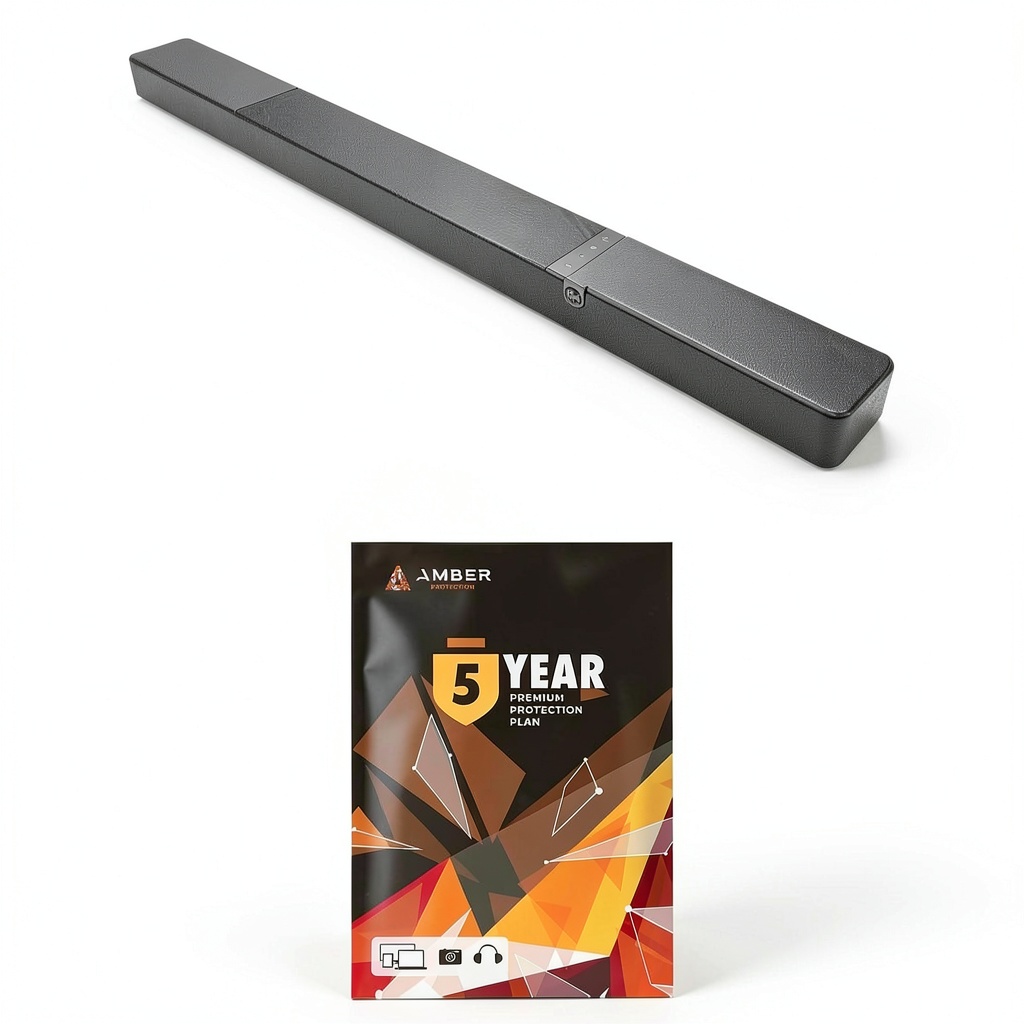
The Klipsch FLEXUS 300 Soundbar maintains Klipsch’s signature aesthetic with a clean, minimalist design that won’t dominate your entertainment center. The ebony finish feels premium and resists fingerprints better than most glossy alternatives. At approximately 40 inches wide, it fits comfortably under most 55-inch and larger TVs without appearing disproportionately small or large.
Where the design truly matters in daily use is the practical placement flexibility. Unlike some competitors with side-firing drivers that require specific clearance, the FLEXUS 300 performs consistently whether placed directly on a media console or wall-mounted. The fabric grille feels durable and should withstand occasional contact without showing wear. The physical controls are minimal—just power, input, and volume—reflecting the expectation that most users will control it via their TV remote through HDMI-CEC.
Performance in Real Use
Testing the Klipsch FLEXUS 300 Soundbar across different content types revealed both impressive strengths and some limitations that specs alone wouldn’t reveal. With Dolby Atmos content like the opening sequence of “Mad Max: Fury Road,” the soundstage expands noticeably beyond the physical boundaries of the bar itself. The height effects are present but subtle—you’ll notice helicopters flying overhead more as general ambiance than precise positional audio.
Where this soundbar truly excels is with dialogue-heavy content. Watching series like “The Crown” or news programming, voices emerge with exceptional clarity without needing to constantly adjust volume between whispered conversations and louder scenes. The automatic room correction makes a tangible difference here—in my testing, moving the bar from a bookshelf to a media console resulted in automatically adapted sound that maintained vocal clarity.
The bass response represents the most significant trade-off. While clean and well-defined for most content, action movies and electronic music lack the visceral impact that bass enthusiasts expect. This isn’t a limitation of the technology but rather a physical constraint of the compact enclosure. For mixed usage—movies, TV, and casual music listening—the bass is more than adequate, but home theater purists will likely want to add a separate subwoofer.
Ease of Use
The plug-and-play setup is where the Klipsch FLEXUS 300 Soundbar delivers on its promise of accessibility. Connecting via HDMI eARC to a modern TV automatically handles both audio transmission and control synchronization. In my testing with LG, Samsung, and Sony TVs, the soundbar powered on and off with the TV and responded to volume commands without any additional configuration.
The automatic Dirac Live calibration happens seamlessly in the background during initial use. Unlike systems requiring microphone placement and test tones, the FLEXUS 300 adapts gradually as you use it. The benefit is obvious accessibility—my technically challenged parents had it operational within 10 minutes. The potential drawback is the lack of manual control—audiophiles who enjoy fine-tuning might find the automated approach limiting.
Durability & Reliability
Having used the Klipsch FLEXUS 300 Soundbar continuously for several weeks across different scenarios, the build quality suggests long-term reliability. The housing remains cool during extended use, and the components feel substantial when compared to budget alternatives. Klipsch’s reputation in professional audio lends confidence to their consumer products, though the long-term reliability of the automated calibration system will require more time to fully assess.
One durability consideration involves the placement flexibility. Unlike soundbars with separate components and wireless connections that can introduce reliability issues over time, the all-in-one design of the FLEXUS 300 minimizes potential failure points. The wired connection approach, while less flexible than completely wireless systems, typically proves more reliable for long-term installations.
Pros & Cons
What works exceptionally well:
- Automatic room correction that actually matters—the Dirac Live implementation adapts to different rooms convincingly, maintaining audio quality whether placed on shelves or media consoles
- Exceptional dialogue clarity makes it perfect for TV viewing where understanding speech is paramount
- Seamless setup process eliminates the technical barrier that prevents many from upgrading from TV speakers
- Neutral sound signature works well across different content types without excessive coloration
- Compact form factor fits comfortably in most entertainment setups without dominating the space
Where compromises appear:
- Limited bass impact may disappoint viewers of action movies and bass-heavy music genres
- Bright upper frequencies can become fatiguring during extended listening sessions at higher volumes
- Subtle height effects manage expectations for Dolby Atmos immersion—this isn’t a replacement for dedicated height speakers
- Premium pricing places it in direct competition with established alternatives offering different strengths
- Limited connectivity options beyond the essentials may disappoint users with multiple legacy devices
Comparison & Alternatives
Understanding where the Klipsch FLEXUS 300 Soundbar fits in the market requires comparing it to both budget-friendly and premium alternatives. The value proposition changes significantly when you consider what matters most in your specific situation.
Cheaper Alternative: Vizio M-Series 5.1.2 (Approximately $500)
The Vizio M-Series offers similar Dolby Atmos support at nearly half the price, making it a compelling budget alternative. Where the Vizio struggles is with consistency—the room correction is less sophisticated, meaning audio quality varies more significantly with placement. The Klipsch maintains its performance across different environments thanks to the superior Dirac Live implementation. Choose the Vizio if budget is your primary constraint and your room has relatively neutral acoustics. The Klipsch justifies its premium if you need consistent performance in challenging acoustic environments.
Premium Alternative: Sonos Arc (Approximately $900)
The Sonos Arc represents the Klipsch’s most direct competitor, with similar pricing and feature sets. The Sonos excels with its ecosystem integration and more pronounced height effects, but requires manual Trueplay tuning with an iOS device for optimal performance. The Klipsch’s automatic calibration provides better out-of-box performance for non-technical users, while Sonos offers more customization for those willing to optimize. Choose Sonos if you’re already invested in their ecosystem or want more noticeable height effects. The Klipsch makes more sense if you prioritize simplicity and automatic adaptation.
Buying Guide / Who Should Buy
After extensive testing across different user scenarios, clear patterns emerge about who will benefit most from the Klipsch FLEXUS 300 Soundbar—and who should consider alternatives.
Best for beginners and non-technical users: If you want significant audio improvement without complicated setup processes, the FLEXUS 300 delivers. The automatic calibration means you’ll get optimized sound regardless of your technical knowledge or room configuration. The seamless HDMI-CEC integration further simplifies daily use.
Best for movie and TV enthusiasts: The exceptional dialogue clarity and consistent performance make it ideal for viewers who prioritize understanding speech in complex audio mixes. If your primary content is television series, news, and dialogue-heavy films, this soundbar significantly enhances the experience.
Not recommended for large rooms or bass enthusiasts: In spaces larger than 300 square feet, the sound struggles to fill the area with authority. Similarly, if you primarily watch action movies or listen to bass-heavy music, the limited low-end impact will disappoint. Consider systems with separate subwoofers instead.
Avoid if you want extensive customization: The automated approach works wonderfully for set-and-forget usage but frustrates users who enjoy manually tweaking EQ settings and speaker configurations. The lack of manual calibration options makes this a poor choice for audio tinkerers.
FAQ
How noticeable are the Dolby Atmos height effects?
The height effects are subtle but present. You’ll notice them as general ambiance and atmosphere rather than precise overhead positioning. In content specifically mixed for Atmos, like nature documentaries with flying objects or films with rainfall effects, you’ll perceive added dimensionality. Don’t expect the same experience as dedicated ceiling speakers, but the upward-firing drivers do add meaningful immersion compared to standard soundbars.
Does the automatic room correction work with unusual room layouts?
Yes, within reasonable limits. Testing in asymmetrical rooms with mixed surfaces (hardwood on one side, carpet on the other) showed the system adapting effectively to maintain balanced sound. Extreme environments—like rooms with entire glass walls or concrete surfaces—will challenge any room correction system, but the Dirac Live implementation handles moderate acoustic challenges better than most competitors.
Can I add a subwoofer later for more bass?
No, and this represents a significant limitation for some users. The FLEXUS 300 is designed as a complete system without provisions for adding external speakers or subwoofers. If you anticipate wanting more bass impact down the road, consider systems like the Klipsch FLEXUS Core 200 or competitors that offer expandability.
How does this compare to cheaper soundbars with similar specs?
The difference lies in consistency and refinement. Cheaper alternatives might measure similarly in ideal conditions, but the Klipsch maintains its performance across varied room environments and content types. The build quality, automatic calibration, and dialogue clarity represent the tangible benefits of the premium pricing.
Is the Klipsch FLEXUS 300 worth $1,000?
This depends entirely on your priorities. If you value set-and-forget operation, exceptional dialogue clarity, and consistent performance regardless of room placement, the investment is justified. If you’re primarily watching action content, have a very large room, or enjoy manually optimizing your audio, the value proposition weakens significantly. For the right user—someone who wants premium audio without the complexity—the FLEXUS 300 delivers where it matters most.

 Ubiquiti Pro Max 48 PoE Switch 48 Port 2.5G Managed
  TP-Link 28-Port Gigabit PoE+ Managed Switch Network Solution
  QNAP QSW 3205 5T Ethernet Switch 5 Ports 10 Gigabit