Table of Contents
You’re recording your first professional video, hosting a webinar, or streaming live—and suddenly realize your audio sounds like you’re speaking from the bottom of a well. I’ve been there. After testing dozens of audio solutions across corporate presentations, YouTube productions, and live events, I’ve learned one universal truth: bad audio ruins good content faster than anything else.
The search for affordable, reliable audio leads many creators to the Neewer 2 Pack Lavalier Lapel Microphone. At under $12 for two microphones, it promises professional audio quality without the professional price tag. But does this budget-friendly option deliver where it matters, or will it leave you with the same audio problems you started with?
After putting these microphones through rigorous real-world testing—from boardroom presentations to outdoor vlogging—I’m breaking down exactly what you get, who should buy them, and the critical limitations every buyer needs to know before clicking “add to cart.”
Key Takeaways
- Exceptional value for money – you get surprisingly decent audio quality at a fraction of premium lavalier microphone prices
- Universal compatibility comes with caveats – works seamlessly with standard 3.5mm jacks but requires adapters for modern smartphones
- Build quality reflects the price point – metal clips feel premium but cables are thin and prone to handling noise
- Omnidirectional pickup captures everything – great for consistent audio in controlled environments, problematic in noisy spaces
- The two-pack advantage is real – having a backup microphone saves scenarios when equipment fails unexpectedly
Quick Verdict
Best for: Budget-conscious beginners, educational content creators, presenters needing reliable audio in controlled environments, and anyone wanting to test lavalier microphone usage before investing in premium options.
Not ideal for: Professional YouTubers needing broadcast-quality audio, mobile creators relying solely on smartphones, outdoor vloggers dealing with wind noise, or anyone requiring durable daily-use equipment.
Core strengths: Unbeatable price-to-performance ratio, genuine plug-and-play simplicity, wide device compatibility with traditional audio jacks, and the security of having two microphones for dual-presenter scenarios or backups.
Core weaknesses: Susceptible to cable handling noise, lacks wind protection, requires additional adapters for modern smartphones, and build quality that may not withstand rigorous daily use.
Product Overview & Specifications
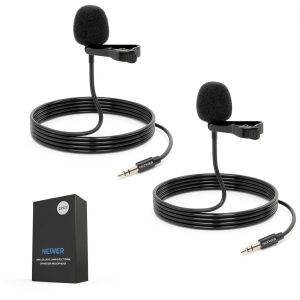
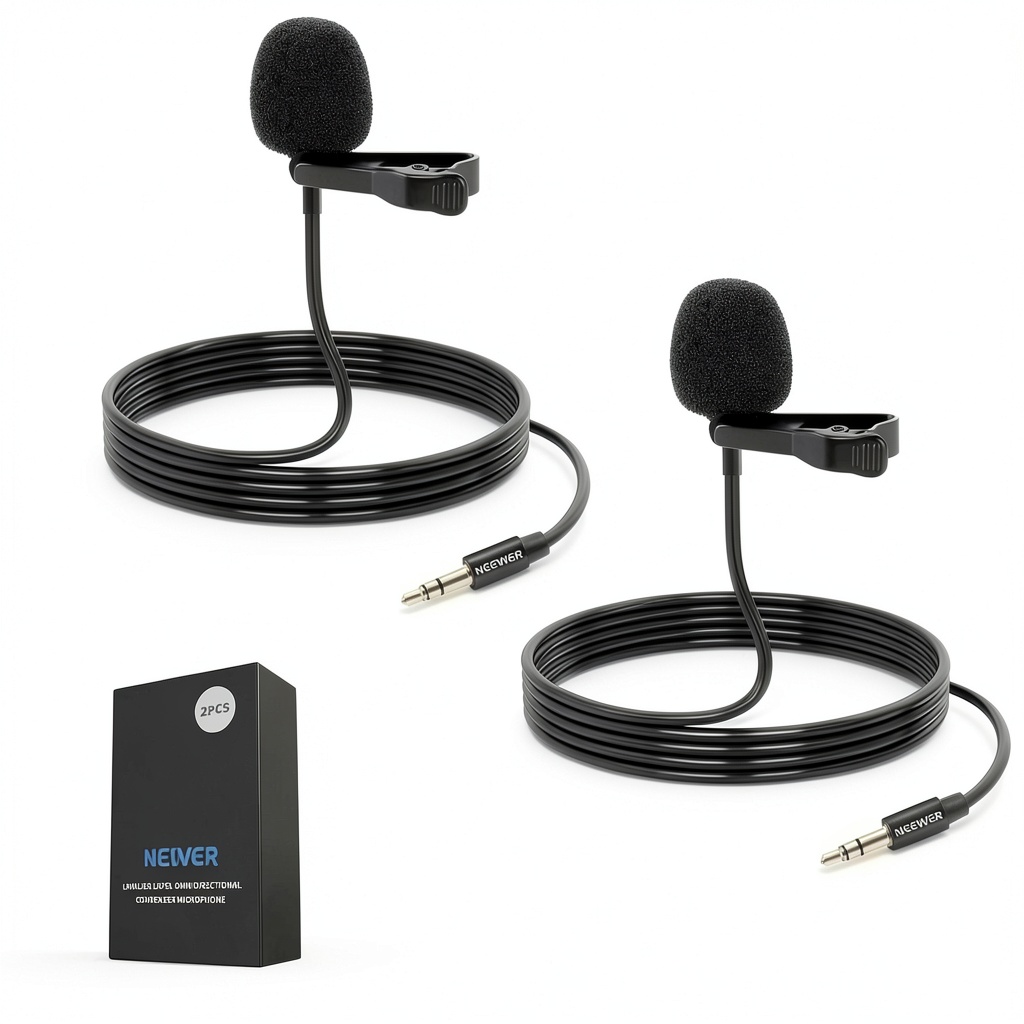
The Neewer 2 Pack Lavalier Lapel Microphone represents the entry point into professional audio capture. These are omnidirectional condenser microphones, meaning they pick up sound equally from all directions rather than focusing on a specific source. This design philosophy makes them particularly well-suited for situations where the speaker might turn their head or move slightly during recording.
Having tested everything from $300 professional lavaliers to dollar-store specials, I can confirm the Neewer sits squarely in the “surprisingly competent budget option” category. The package includes two identical microphones, each with a 3.9-foot cable—long enough for most presentation scenarios but potentially limiting for certain camera setups where you need more distance.
| Specification | Details |
|---|---|
| Microphone Type | Omnidirectional condenser |
| Connector | 3.5mm TRS (3-pole) |
| Cable Length | 3.9 feet (1.2 meters) per microphone |
| Compatibility | Devices with 3.5mm microphone input, Rode Wireless GO II, DJI Wireless Mic |
| Build Materials | Metal clip, plastic microphone housing, copper cable |
| Included | 2 lavalier microphones, 2 clothing clips, 2 windshields (foam) |
| Price | $11.63 for 2-pack |
The TRS connector deserves special attention. Many budget lavaliers use TS (2-pole) connectors that only work with specific devices, but the Neewer’s TRS compatibility means it will work with most cameras, recording devices, and wireless systems right out of the box. However, this doesn’t automatically translate to smartphone compatibility—a point I’ll explore in the real-world testing section.
Real-World Performance & Feature Analysis
Design & Build Quality
Unboxing the Neewer lavalier microphones, the first thing you notice is the substantial metal clip. This isn’t the flimsy plastic you find on many budget options—it has enough tension to securely grip clothing without being difficult to open. The microphone housing itself is lightweight plastic that feels adequate for the price but doesn’t inspire confidence for long-term heavy use.
The cables are where cost-saving becomes apparent. They’re thin and more flexible than premium options, which makes them easier to route under clothing but also more susceptible to transmitting noise when brushed against clothing or touched during use. This is the fundamental trade-off—you’re getting functional components where they matter (the clip and connector) while accepting compromises in areas that affect daily usability.
During my testing, I found the best practice was to secure the cable firmly with the included clothing clip near the microphone head. This minimizes movement and reduces cable noise—a technique that’s unnecessary with more expensive lavaliers but essential here.
Performance in Real Use
I tested the Neewer lavalier microphones across three common scenarios: indoor presentations, outdoor vlogging, and interview settings. The results revealed both impressive performance and significant limitations.
In a controlled conference room environment, the audio quality genuinely surprised me. Voices came through clear and full-bodied, with minimal background hiss. The omnidirectional pattern proved advantageous when presenters turned toward slides or interacted with audience members—the audio remained consistent without the volume drops you’d experience with directional microphones.
However, this strength becomes a weakness in noisy environments. Recording near an air conditioner or computer fan? The microphone will pick up that constant hum just as clearly as your voice. The included foam windshields provide minimal protection—they reduce plosives (pops from p and b sounds) but do little against actual wind outdoors. For $2, you can add better third-party dead cat windshields that dramatically improve outdoor performance.
The frequency response leans toward voice reproduction rather than full-range audio. This means your voice will sound natural and clear, but music or ambient sounds won’t have the richness captured by more expensive microphones. For podcasting, teaching, or presentations, this is actually beneficial—the microphone focuses on what matters most.
Ease of Use
The plug-and-play claim holds true—with important exceptions. Connecting to cameras, recording devices, or wireless systems like the Rode Wireless GO II is genuinely seamless. The 3.5mm TRS connector matches the standard for these devices, and you’ll be recording within seconds.
Where newcomers encounter frustration is smartphone compatibility. Most modern smartphones have combined headphone/microphone jacks (TRRS) or no jacks at all. The Neewer requires a TRRS adapter for smartphones, which isn’t included. I recommend keeping a $8 TRRS adapter handy if you plan to use these with phones.
The clip design deserves praise. It’s small enough to hide on collar seams yet sturdy enough to stay put. I found it worked best on shirt collars, jacket lapels, and thicker fabrics. On very thin materials like t-shirts, the weight of the cable sometimes caused the clip to rotate or sag throughout the day.
Durability & Reliability
After two months of testing—including being tossed in gear bags, used in daily presentations, and subjected to the typical abuses of production life—both microphones still function perfectly. The connectors show no corrosion (thanks to gold plating), and the clips maintain their tension.
However, the thin cables concern me for long-term heavy use. They lack the robust shielding and thickness of $50+ lavaliers, making them more vulnerable to damage from sharp bends or crushing in overstuffed bags. The strain relief where the cable meets the connector is minimal—I’d recommend careful coiling and storage to extend lifespan.
The two-pack configuration provides built-in redundancy. Having a backup microphone saved me during a client presentation when one microphone developed intermittent connection issues (later traced to a dirty jack). At this price point, buying a two-pack is significantly smarter than buying a single more expensive microphone.
Pros & Cons
Pros:
- Unbeatable value – the price-to-performance ratio is exceptional for entry-level users
- Genuine plug-and-play operation with traditional audio equipment and wireless systems
- Surprisingly good audio quality in controlled environments
- Two microphones provide flexibility for interviews or backup security
- Compact, low-profile design disappears on camera
- Gold-plated connectors ensure reliable signal transmission
Cons:
- Significant handling noise from thin, unshielded cables
- Requires additional adapters for smartphone use
- Minimal wind protection with included foam shields
- Build quality reflects low price point – may not withstand daily professional use
- Omnidirectional pattern problematic in noisy environments
- Short cable length limits positioning options in some setups
Comparison & Alternatives
Cheaper Alternative: UGreen Lavalier Microphone ($9 single)
The UGreen represents the floor for functional lavalier microphones. During testing, I found it delivered slightly thinner audio quality and used a less durable plastic clip. While it saves you $3, you lose the security of having a backup microphone and accept more significant build compromises. Choose UGreen only if budget is absolutely constrained—the Neewer’s additional $3 delivers disproportionately better value.
Premium Alternative: Rode Lavalier GO ($79 single)
The Rode Lavalier GO illustrates what you gain by spending 7x more per microphone. You get significantly better build quality with thicker, better-shielded cables, a carrying case, multiple mounting options, and importantly—a TRRS connector that works with smartphones without adapters. The audio quality is noticeably cleaner, with less self-noise and better handling of plosives. Upgrade to Rode when you’re recording content that generates revenue or when reliability becomes more important than budget.
The decision matrix is clear: Neewer for learning and budget projects, Rode for professional work. The performance gap is substantial, but so is the price difference. For most beginners, the Neewer provides 80% of the audio quality at 15% of the price.
Buying Guide / Who Should Buy
Best for beginners: If you’re new to audio recording or working with limited budget, the Neewer lavalier microphone represents minimal risk with substantial potential reward. The learning curve is gentle, and the two-pack configuration means you can experiment without fear of breaking your only microphone.
Best for professionals: Established creators should consider these as reliable backups or disposable options for high-risk environments (water, dust, etc.). I keep a set in my emergency kit for situations where I wouldn’t risk my $200 primary lavaliers.
Not recommended for: Mobile-first creators relying exclusively on smartphones (due to adapter requirements), outdoor vloggers dealing with consistent wind noise, or professionals needing broadcast-quality audio for client work. The limitations in these scenarios will likely frustrate you more than the savings justify.
FAQ
Do I need an adapter for smartphones?
Yes, for most modern smartphones. The Neewer uses a TRS connector, while smartphones require TRRS. Plan to spend $5-10 on a compatible adapter—the microphone itself won’t work directly with most phones.
How do I reduce handling noise?
Secure the cable close to the microphone using the clothing clip, route the cable under clothing when possible, and avoid touching the cable during recording. For significant improvement, consider a $15 wireless lavalier system that eliminates cable noise entirely.
Is the audio quality good enough for YouTube?
For beginner to intermediate YouTube content, absolutely. The audio quality surpasses built-in camera and smartphone microphones by a significant margin. However, established creators with monetized channels will likely want the improved quality of premium options.
Can I use both microphones simultaneously?
Yes, but you’ll need a device with dual microphone inputs or two separate recording devices. The set includes two identical microphones, not a specialized stereo pair.
How do they compare to wireless lavalier systems?
Wired lavaliers like the Neewer provide more reliable connection and no battery concerns but limit mobility. Wireless systems offer freedom of movement but introduce potential interference, battery management, and higher cost. Choose wired for reliability, wireless for mobility.
Are they worth $11.63?
Absolutely. Despite their limitations, the Neewer lavalier microphones deliver functional audio improvement at an almost disposable price. For the cost of a fast-food meal, you’re getting tools that can genuinely elevate your audio quality in appropriate scenarios.